
OpenClaw's (Clawdbot) 150K Github Stars is more than just "this week's" AI hype
OpenClaw’s tells us a lot about where personal AI infrastructure is heading

There’s a pattern I’ve seen play out across our best-performing investments at Grand Ventures: a small team ships something opinionated, open-sources it, and the developer community responds with a velocity that surprises even the founders.
Astronomer did it with Apache Airflow. Payload did it with headless CMS. Traceloop is doing it with AI observability. Comp AI is doing it with compliance.
Now there’s a new AI agent called OpenClaw doing it with personal AI infrastructure. One of our portfolio CEOs, Akshay Dodeja @ Terminal49 showed me OpenClaw (then called Clawdbot) way back on January 8th and, at that moment, I can confidently say I really didn’t comprehend what it was. It was clear Akshay thought it was revolutionary and was already changing the way he worked, and that it was already creating incredible leverage for him and his team.
The Numbers Don’t Lie
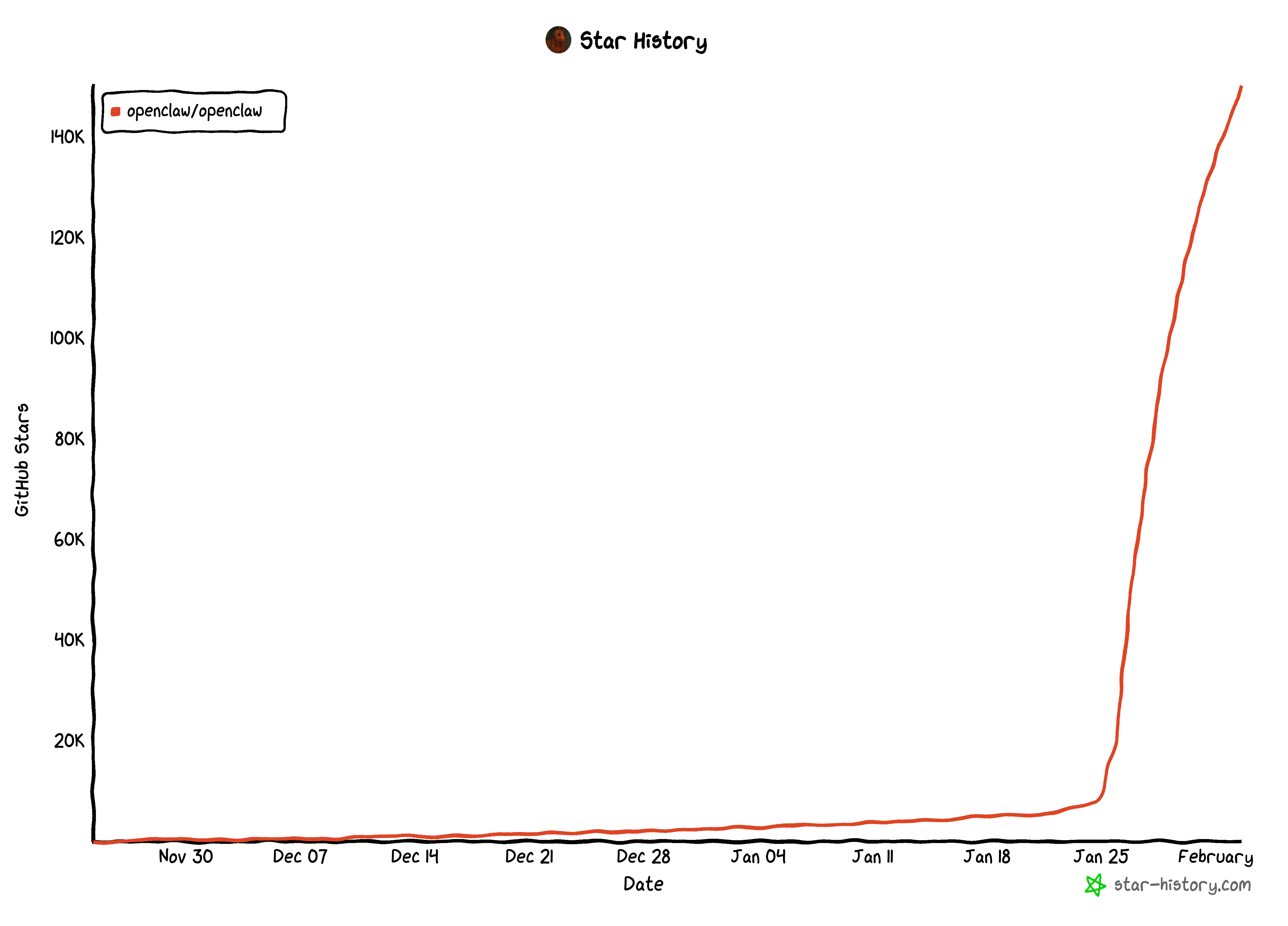
OpenClaw, formerly called Clawdbot (and for a hot moment Moltbot), launched in late November 2025. In roughly ten weeks, it has:
*150,000+ GitHub stars
22,000+ forks
416,000+ npm downloads (last 30 days)
A thriving Discord community called “Friends of the Crustacean”, and a social network fancied after Facebook for AI agents to chat with one another called Moltbook.
For context: projects typically measure star growth in months or years. OpenClaw is measuring it in weeks. The trajectory looks less like organic growth and more like a community that was waiting for this to exist.
What OpenClaw Actually Is
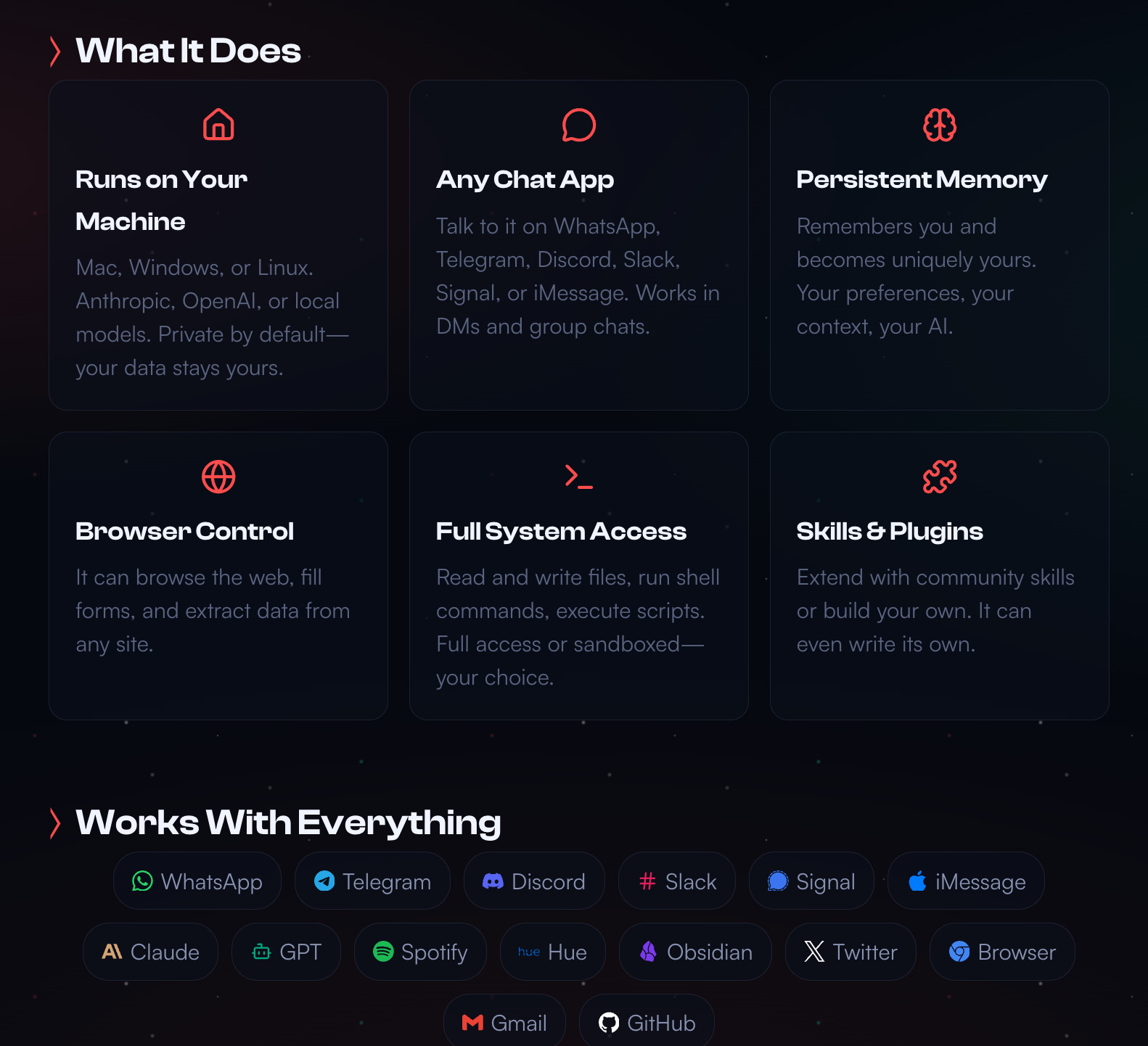
At its core, OpenClaw is a personal AI assistant framework, but that undersells it. It’s really a multi-channel control plane that lets you run a personal AI agent across every messaging surface you already use: WhatsApp, Telegram, Discord, Slack, Signal, iMessage, Microsoft Teams, Google Chat, and more.
The architecture is local-first. The Gateway runs on your machine. In my case it’s running on a UTM virtual machine running on my Mac. I’m about to pull the trigger on a dedicated Mac Mini to run OpenClaw a more isolated (and hopefully secure) manner.
Your data stays with you. OpenClaw interacts with you on the channels you’re already in, for example Apple iMessages, WhatsApp, Slack, Discord, etc which means the adoption friction is essentially zero.
It can read and respond to your email, read your calendar and book (or rebook) meeting, it can read all your news sources (X, RSS, URLs, etc) and summarize them for you, it can process invoices, etc etc — pretty much almost anything. Note: I’m not suggested you should enable all this functionality yet — there are serious security concerns being address by the community as I type this.
This isn’t just a chatbot wrapper. It’s infrastructure, more directly it’s “personal infrastructure”.
Why This Fits the COSS Thesis
At Grand, we’ve written extensively about what we look for in commercial open-source companies. OpenClaw checks the boxes:
Developer-first architecture
OpenClaw is MIT-licensed, TypeScript-native, and built to be extended. The skills system lets developers add capabilities without forking the core. This is how you build a platform, not just a product.
Community velocity that signals product-market fit
149K stars in 10 weeks isn’t marketing. It’s signal. When developers star a repo, they’re bookmarking something they intend to use. When they fork it, they’re building on it. When they join a Discord server named after a crustacean, they’re bought in.
Infrastructure at an inflection point
We’ve backed companies at the intersection of legacy systems and next-generation transformation. OpenClaw sits at exactly this intersection: legacy messaging infrastructure (WhatsApp, SMS, iMessage) meets the AI agent wave.
The timing surely isn’t accidental. As AI agents have become more capable, the question shifts from “what can they do?” to “where can I reach them?” OpenClaw is the first AI agent that answers that question with “everywhere you already are.”
The Social Signal
Beyond the GitHub metrics, the social proof is striking. My feed has been full of developers sharing their OpenClaw setups, building custom skills, and—notably—replacing expensive SaaS tools with a self-hosted lobster.


What Comes Next
OpenClaw is pre-commercial. There’s no enterprise tier, no pricing page, no sales team. The founder, Peter Steinberger, is a well-known figure in the developer community with a track record of building developer tools.
Whether OpenClaw becomes a venture-scale business depends on the usual questions: Can they build a commercial layer without alienating the community? Is there enterprise demand for managed AI assistant infrastructure? What’s the monetization wedge?
But those are tomorrow’s questions. Today’s observation is simpler: OpenClaw is the fastest-growing open-source project in the AI agent infrastructure space, and the community momentum is real.
At Grand, we pay attention when developers vote with their stars, their forks, their X posts (and other), and Discord memberships. OpenClaw has all these at a scale that we’ve really never seen before.
If you’re a founder building open-source infrastructure for the AI era, drop me a line at nathan(AT)grandvcp.com. The best COSS companies often start exactly like this: a side project that captures something the market was waiting for.
Nathan Owen
Partner, Grand Ventures